How to Repair Cabinet Hinges That Sag or Stick
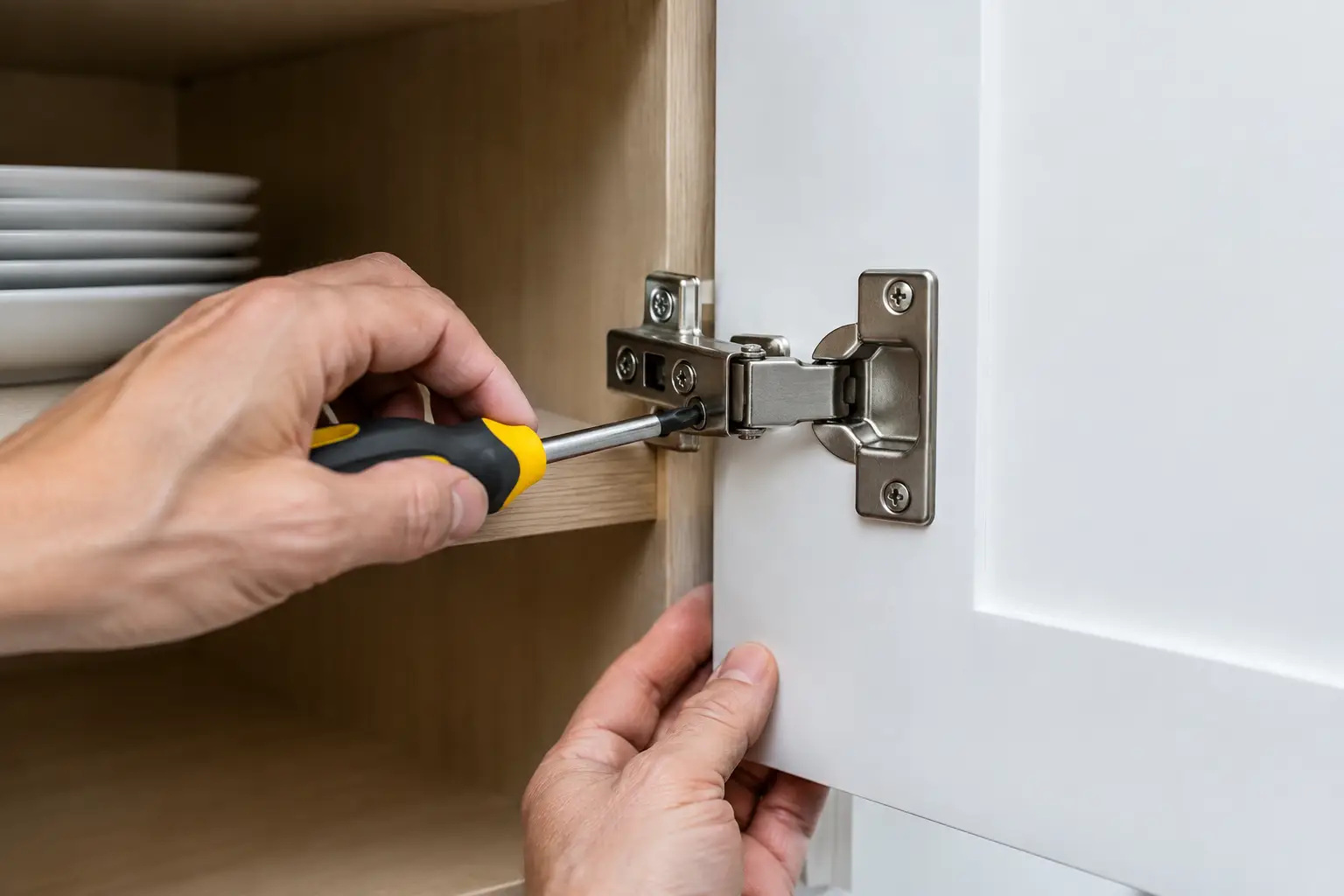
A cabinet door that drags, hangs crooked, or will not stay closed can make an otherwise well-kept kitchen or bathroom feel worn out. Knowing how to repair cabinet hinges starts with identifying the real cause. A loose screw may be all that is wrong, but swollen cabinet material, stripped screw holes, bent hardware, or a door that has shifted can require a more careful repair.
Most hinge problems are manageable when caught early. The key is not to force the door or keep tightening screws that no longer have solid material to grab. A few minutes of inspection can prevent a small adjustment from turning into a damaged cabinet frame or door.
Start by Finding the Source of the Problem
Open and close the cabinet door slowly. Watch where it rubs, whether the gap around the door is even, and whether the hinge moves along with the door. If the entire door drops when you lift it gently, loose hinge screws are the most likely issue. If the screws feel tight but the door still sits low or crooked, the hinge may need adjustment or replacement.
Look closely at both sides of each hinge. Cabinets can use concealed European-style hinges, surface-mounted hinges, semi-concealed hinges, or older decorative butt hinges. The repair method depends on the hinge style, but the first checks are similar: inspect the screws, the wood or particleboard around them, and the hinge itself.
Also check for moisture damage. Kitchen sink cabinets and bathroom vanities are especially vulnerable to slow leaks and humidity. Soft, swollen, or crumbling material around a hinge will not hold a screw for long, even if the door seems fine immediately after a quick tightening.
Tighten Loose Cabinet Hinge Screws First
Use a screwdriver that fits the screw head snugly. A loose-fitting driver can strip the screw head, making a simple repair more difficult. Tighten the screws that attach the hinge to the cabinet frame and the screws that attach it to the door.
Do not overtighten. If the screw turns without becoming firm, the hole is stripped. If it tightens but the door is still out of alignment, the hinge may need an adjustment rather than more force.
For concealed hinges, there are usually separate screws for mounting and adjustment. The mounting screws hold the hinge in place. Adjustment screws move the door slightly up or down, side to side, or closer to and farther from the cabinet box. Turning the wrong screw can make the alignment worse, so make small changes and check the door after each adjustment.
Repair Stripped Screw Holes Properly
Stripped holes are one of the most common reasons cabinet doors sag. In solid wood, a practical repair is to remove the screw, fill the hole with wood glue and tightly packed wooden toothpicks or a small wood dowel, then let the glue dry completely. Trim the filler flush with the surface and drill a small pilot hole before reinstalling the screw.
This approach works best when the surrounding wood is sound. If the cabinet door is made from particleboard or medium-density fiberboard, toothpicks may provide only a short-term hold. A cabinet hinge repair plate, designed to spread the load across a larger area, is often a better option for damaged engineered material. It can restore a secure mounting point without replacing the whole door.
Using a longer or wider screw can sometimes help, but it is not always the right answer. A screw that is too long may come through the front of a cabinet door or penetrate into an area where it causes other problems. A wider screw can split thin solid wood. Match the repair to the cabinet material and available depth.
Adjust Concealed Hinges for an Even Door Gap
Modern concealed hinges are designed for fine adjustments. They can correct a door that sits too high, too low, too far left or right, or too far forward. Before making adjustments, support the door so its weight is not pulling against the hinge screws.
Start with the side-to-side adjustment if the gap between two doors is uneven or one door rubs against the cabinet frame. Make a small turn on the adjustment screw, then close the door and inspect the gap. Adjust both hinges evenly when possible. Correcting only the top hinge or only the bottom hinge can twist the door and create a new problem.
If the door sits too high or low, loosen the mounting screws slightly, reposition the hinge plate or door, and retighten the screws. Some concealed hinges have a dedicated height adjustment, while others require moving the mounting plate by hand. A helper can make this easier on wider pantry doors or heavy solid-wood cabinet doors.
Depth adjustments help when a door does not close flush or strikes the cabinet face frame. Move the door in small increments. A door that is set too far inward may bind, while a door that sits too far outward can look uneven and leave a visible gap.
Replace Bent, Worn, or Broken Hinges
Sometimes adjustment will not solve the issue. Replace the hinge when it is visibly bent, cracked, rusted, loose at its pivot point, or no longer holds the door in the correct position. Hinges can also wear out internally after years of repeated use, particularly on frequently used kitchen cabinets.
When replacing a hinge, remove one hinge at a time if possible. This helps keep the door positioned correctly and gives you a direct comparison for the replacement. Measure the existing hinge carefully, including its overlay, cup diameter for concealed hinges, mounting-hole pattern, and opening angle. Cabinet hinges may look similar while using different measurements.
If both hinges are old and one has failed, replacing the pair is usually the better choice. New hinges with different tension or movement can cause the door to operate unevenly. For cabinets with soft-close hardware, choose a replacement that is compatible with the existing style rather than mixing soft-close and standard hinges on the same door.
Do Not Ignore the Cabinet Box or Door Condition
A hinge can only perform as well as the material holding it. If a cabinet side panel is cracked, water-damaged, or pulling away from the wall, replacing the hinge alone will not provide a lasting repair. The same is true when a cabinet door is warped or split near the hinge edge.
Check that the cabinet box is firmly attached and level. A cabinet that has shifted can throw off several doors at once. If multiple doors have started rubbing, sagging, or failing to close around the same time, the issue may be with the cabinet installation rather than individual hinges.
This is where a repair can move beyond a quick hardware fix. Damaged cabinet panels may need reinforcement, new mounting material, or partial rebuilding. In older homes, it may also make sense to address water damage, worn drawer hardware, and loose trim while the cabinet area is already being repaired.
Tools That Make the Job Easier
For a typical cabinet hinge repair, keep a Phillips-head screwdriver, drill with small pilot bits, wood glue, wood filler or dowels, and replacement screws or hinges available. A level and measuring tape are useful when several doors need adjustment. For heavy doors, a small support block or a second person can prevent strain on the remaining hinge.
Avoid using a power drill to drive small cabinet screws at high speed. It is easy to strip a hole or snap a screw in particleboard. A hand screwdriver provides more control for final tightening.
When to Call for Professional Cabinet Repair
A homeowner can often handle a loose screw or minor alignment issue. Professional help is a practical choice when the cabinet material is badly damaged, several doors need realignment, hinges are failing repeatedly, or the repair involves structural cabinet work. It is also worth calling a professional when cabinet problems are connected to a leak, damaged flooring, or a planned kitchen or bathroom update.
For homeowners in Tallahassee, Marianna, Dothan, and nearby communities, Sola Handyman Services can address cabinet hinge issues along with the underlying repairs that keep cabinets working properly. A door should open smoothly, close evenly, and stay secure without becoming another item on the home maintenance list.