Exterior Home Repair Guide for Florida and Alabama
A loose shingle, a soft spot in fascia, or a gutter that overflows during a hard afternoon rain can turn into a much larger repair if it is left alone. This exterior home repair guide helps homeowners in Tallahassee, Marianna, Dothan, and nearby communities recognize common problems before water, pests, and weather cause more extensive damage.
Exterior maintenance is not about making a home look perfect every weekend. It is about protecting the parts of the house that keep water out, support safe access, and preserve curb appeal. A practical inspection a few times a year can help you prioritize repairs and avoid spending money on preventable damage.
Start With a Walk-Around Inspection
Walk slowly around your home after a heavy rain, a windy day, or a major temperature change. Look from ground level first. You are checking for obvious changes: missing materials, staining, sagging, cracks, loose trim, and places where soil or water sits against the house.
Bring a flashlight for shaded areas and take photos of anything that needs a closer look. Photos make it easier to compare damage over time and explain the issue when you call for professional help. Do not climb onto a roof or use a tall ladder unless you have the right equipment and experience. Many exterior repairs are manageable, but falls and hidden structural damage are not worth the risk.
Pay special attention to the transition points where different materials meet. Roof edges, chimney flashing, window trim, siding seams, porch posts, and door thresholds are common places for water intrusion. A small opening in caulk or flashing can send water behind the visible surface, where it may damage sheathing, framing, or insulation before you see a stain indoors.
Roof, Gutters, and Drainage Come First
Your roof and drainage system handle the most direct exposure to rain. In North Florida and southeast Alabama, intense storms can test these systems quickly. If gutters are clogged, loose, or poorly pitched, water may spill over the edge and soak fascia boards, siding, foundations, and landscaping.
Check gutters for leaves, roof grit, standing water, and separated joints. Downspouts should carry water away from the foundation, not empty directly beside it. Extensions may be needed when water pools near the house or creates erosion. Also look for gutters pulling away from the fascia, which may indicate loose fasteners or rotting wood behind the gutter.
From the ground, inspect the roofline for curled, cracked, lifted, or missing shingles. Dark areas, exposed nail heads, damaged flashing, and granules collecting in gutters can also point to roof wear. One damaged shingle does not always mean a full roof replacement is needed. However, multiple missing shingles, recurring leaks, or storm damage should be evaluated promptly by a qualified professional.
Drainage problems often show up at ground level. Soil should slope away from the foundation where possible. Low spots near the home, overflowing gutters, and leaking outdoor faucets can keep the area too wet. Over time, excess moisture can contribute to foundation movement, wood rot, mold, and insect activity.
Siding, Trim, and Exterior Paint Protect More Than Appearance
Peeling paint is easy to dismiss as a cosmetic issue, but paint and sealant form a protective layer over wood and other exterior surfaces. Once that layer fails, moisture can reach trim boards, fascia, window frames, and siding. The repair may then require more than scraping and repainting.
Look closely at lower trim boards, corners, and areas around windows and doors. These sections receive splashback from rain and irrigation and are often the first to show rot. Press gently with a screwdriver only if you can do so without damaging the finish. Wood that feels soft, crumbles, or gives way needs repair rather than another coat of paint.
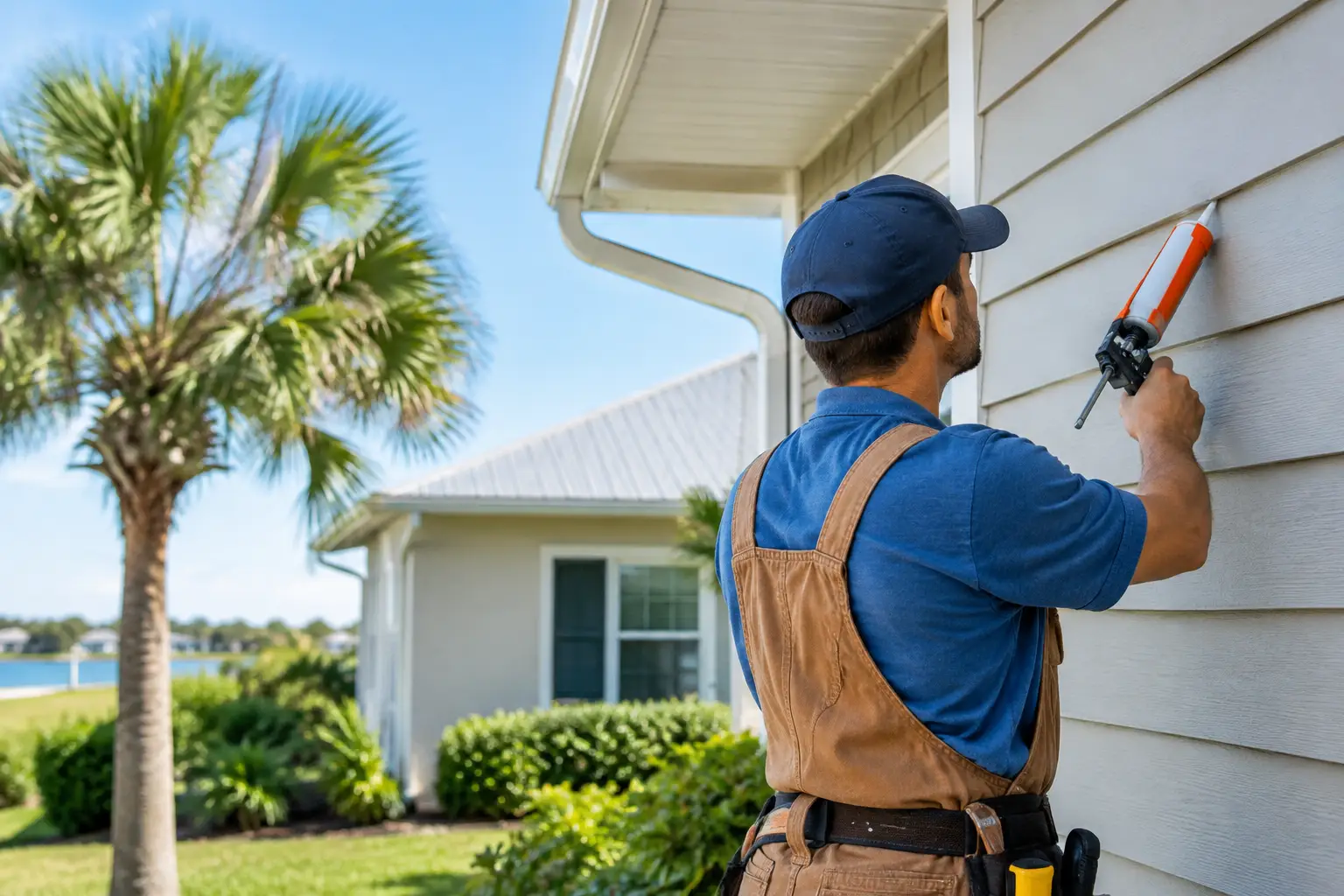
Cracked caulk around windows, doors, and siding penetrations should be removed and replaced with the correct exterior-grade product. Caulk is not a permanent fix for every gap. If trim is loose, warped, or decayed, the underlying material may need to be repaired first. Painting over movement or rot only delays the real work.
Vinyl and fiber-cement siding need attention too. Watch for cracks, loose panels, failed joints, and gaps around fixtures. Avoid pressure washing at excessive force, especially near windows, vents, and seams. High-pressure water can force moisture behind siding and create the very problem you were trying to prevent.
Check Doors, Windows, and Outdoor Access Points
Exterior doors and windows affect security, comfort, and energy use. A door that sticks, drags, or has visible gaps may need adjustment, weatherstripping, threshold repair, or frame work. If you can see daylight around a closed door, rain and insects may find the same opening.
Test window operation and inspect screens, locks, trim, and exterior sealant. Condensation between panes usually signals a failed insulated glass seal, while water stains inside the frame may indicate an exterior flashing or caulking issue. The source is not always where the stain appears, so avoid sealing over the problem without checking the surrounding trim and siding.
Porch doors, sliding doors, and garage entry doors deserve extra attention because they get frequent use. Loose hinges, worn sweeps, damaged thresholds, and failing hardware can lead to bigger alignment problems. Small adjustments made early can often keep a door from damaging the frame or flooring.
Repair Decks, Porches, Steps, and Railings for Safety
Outdoor structures take a beating from sun, rain, foot traffic, and insects. Check deck boards for cracking, splintering, soft areas, and loose fasteners. Inspect posts where they meet the ground or concrete, as these areas are especially vulnerable to moisture damage.
Railings should feel secure when pressure is applied. Wobbling rails, loose stair treads, damaged handrails, and uneven steps are safety concerns that should not wait. On older decks and porches, connections to the house and support framing may need a closer inspection, particularly if the structure sags or bounces.
Cleaning and sealing can extend the life of sound wood, but they cannot restore rotted boards or weakened framing. Replace damaged material before refinishing. For homeowners considering a larger porch, deck, or exterior update, it makes sense to address structural repairs before choosing finishes and cosmetic upgrades.
Watch for Pest Damage and Moisture Clues
Termites, carpenter ants, and wood-destroying insects are drawn to moisture-damaged wood. Mud tubes, small piles of sawdust-like material, hollow-sounding trim, and unexplained paint bubbling are all reasons to investigate. In some cases, the pest treatment comes first. In others, the source of moisture must be corrected before repairs will last.
Do not overlook soffits, vents, and eaves. Damaged screens or openings can allow birds, squirrels, insects, and other pests into attic spaces. Loose soffit panels can also signal water damage at the roof edge. These repairs may appear minor, but they protect ventilation and help keep unwanted animals out of the home.
A Practical Exterior Maintenance Schedule
Most homeowners do not need a complicated checklist. A seasonal routine is usually enough to catch developing issues. In spring, clear gutters, inspect storm damage, test outdoor faucets, and look for paint or caulk failure. Before the wettest parts of the year, confirm that downspouts drain properly and that porch, deck, and stair surfaces remain safe.
After strong storms, check for missing shingles, fallen limbs, damaged screens, and standing water. In fall, remove leaves from gutters and roof valleys, trim vegetation away from siding, and inspect weatherstripping around exterior doors. Winter is a good time to plan painting, trim replacement, drainage improvements, and other projects before small defects get worse.
Keep shrubs and tree limbs from rubbing against the home. Vegetation traps moisture, blocks airflow, and gives pests an easier path to siding and rooflines. Leave enough clearance to inspect the exterior walls and keep irrigation from spraying directly onto the house.
Know When to Call a Professional
A homeowner can often handle simple cleaning, light caulking, screen replacement, and minor touch-up work. The project changes when there is rot, recurring water intrusion, structural movement, roof damage, electrical components, or work that requires ladders and specialized tools.
Professional help is also useful when several exterior issues are connected. A rotted fascia board may involve gutter removal, roof-edge repair, trim replacement, and painting. A sticking door may be caused by a worn threshold, but it could also reflect moisture damage or movement in the framing. Addressing the cause, not just the visible symptom, leads to a repair that holds up.
Sola Handyman Services helps homeowners across the Tallahassee, Marianna, and Dothan areas with practical exterior repairs, maintenance, and improvement projects. Whether the job involves damaged trim, porch repairs, siding concerns, or a list of smaller fixes, skilled workmanship can help protect the home and reduce the burden of managing repairs yourself.
Start with the issue you can see, then look for the water, wear, or movement behind it. Taking care of one weak spot now can prevent it from becoming the project that disrupts your home later.