Storm Damage Home Repairs That Matter First
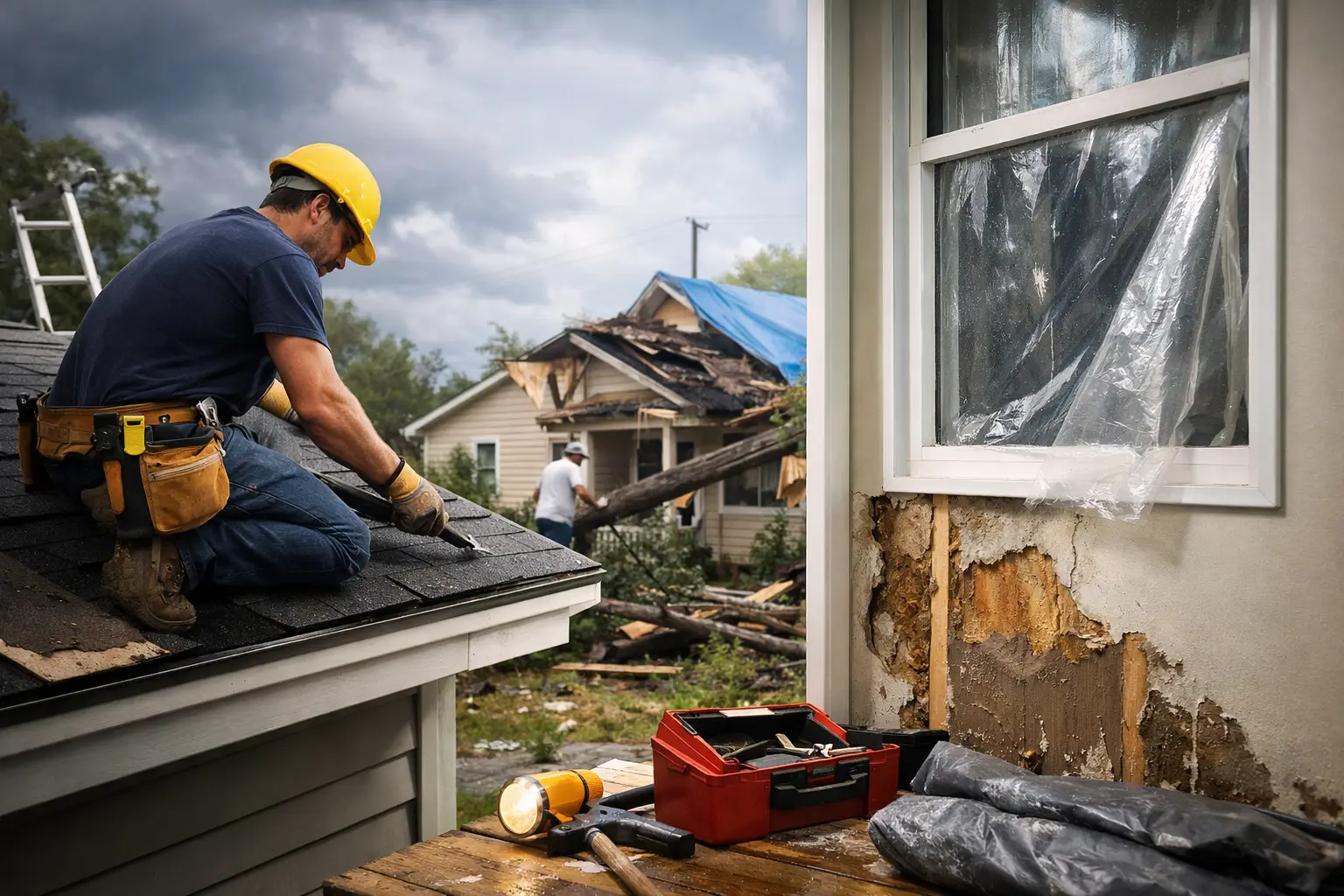
After a strong storm rolls through, the damage is not always dramatic at first glance. A few missing shingles, a wet ceiling spot, or a fence leaning out of place can look manageable until the next rain turns a small issue into a bigger repair. That is why storm damage home repairs need to start quickly, with the right priorities and a clear plan.
For homeowners in places like Tallahassee, Marianna, Dothan, and nearby communities, storm season is not theoretical. Heavy rain, wind, fallen limbs, and flying debris can affect roofing, siding, soffits, drywall, windows, decks, and exterior structures all at once. The challenge is knowing what needs immediate attention, what can wait a few days, and when it makes sense to bring in professional help.
Storm damage home repairs start with safety
Before any repair work begins, the home needs to be safe to enter and safe to work around. If there are downed power lines, a strong smell of gas, major roof collapse, active flooding near electrical systems, or large broken trees putting pressure on the structure, those issues come first. In those cases, the right move is to keep clear and contact the appropriate emergency utility or response service.
Once the property is safe to access, walk the exterior carefully and look for visible damage. Pay attention to roofing materials on the ground, damaged gutters, cracked windows, torn screens, loose siding, bent flashing, broken porch rails, and fallen branches. Inside, look for water stains, bubbling paint, damp insulation, soft drywall, and flooring that feels swollen or uneven.
This early inspection matters because storm damage often spreads. Water intrusion behind a wall or under roofing materials may not be obvious from the driveway, but it can lead to mold, wood rot, and interior damage if it sits too long.
What to address first after the storm
The first priority is stopping active water entry. If the roof has exposed areas, flashing is torn loose, or windows and doors are no longer sealed, temporary protection may be needed right away. Tarping a damaged roof section, covering broken window openings, or securing exposed exterior areas can help limit additional interior damage until permanent repairs are completed.
The second priority is structural stability. Not every storm repair is cosmetic. A damaged soffit can expose the roof edge. A loose section of fascia can affect gutter performance. A shifted fence post or damaged deck stair may create a safety risk. If a door frame is racked from impact or water swelling, even closing and locking the house properly can become a problem.
The third priority is moisture removal and interior drying. Wet drywall, insulation, trim, and subflooring do not improve with time. They usually get worse. The longer moisture remains trapped, the more likely you are to deal with staining, warping, musty odors, and hidden deterioration.
Common areas that need storm damage home repairs
Roofing is often the most urgent category because it protects everything below it. Wind can lift shingles without tearing them off completely, which means the damage may be missed until water appears indoors. Roof vents, flashing around penetrations, ridge caps, and roof edges are all vulnerable during high winds and heavy rain.
Gutters and downspouts are another common problem area. A storm may pull sections loose, clog them with debris, or bend them enough to change water flow. That matters more than many homeowners expect. Poor drainage can send water back toward fascia boards, exterior walls, and the foundation.
Siding and trim also take a beating in severe weather. Vinyl can crack, wood trim can split, and fasteners can loosen. Even if the damage looks minor, exposed areas allow moisture in behind the surface, where it is harder to see and more expensive to fix later.
Windows, doors, and screens are frequent trouble spots as well. Wind-driven rain can find its way through damaged caulk lines, bent frames, or impact cracks. If a storm has affected how a window closes or how an exterior door seals, that should be repaired promptly.
Inside the home, ceilings, drywall, flooring, baseboards, and insulation may all need attention after a leak. Sometimes the roof is repaired quickly, but the interior damage remains. That can leave a home looking fine from the outside while moisture problems continue indoors.
Temporary fixes versus permanent repairs
One of the biggest mistakes after a storm is treating a temporary fix like a completed repair. A tarp helps, but it is not a roofing system. Caulk around a damaged frame may slow water entry, but it does not solve a warped opening or failed flashing. Screwing a loose gutter back into soft wood might hold for a short time, but it does not correct the underlying damage.
That does not mean temporary measures are the wrong choice. In many cases, they are exactly what is needed in the first 24 to 72 hours. The key is recognizing the difference between protecting the home now and properly restoring it for the long term.
Permanent repair work should address both the visible damage and the cause behind it. If drywall is stained from a leak, the source of the leak needs to be fixed before patching and painting. If a section of fascia is rotted, the repair should include checking adjacent trim, roof edge details, and gutter attachment points.
When professional help makes the most sense
Some post-storm issues are straightforward, while others are harder to judge from the ground. That is where an experienced repair professional adds value. A homeowner may notice a ceiling stain but not realize the soffit, fascia, roof decking, and insulation have all been affected in the same area.
Professional help is especially useful when repairs cross multiple parts of the home. Storm damage rarely stays in one lane. A single weather event might leave you needing exterior trim repair, drywall replacement, door adjustment, fence work, and minor remodeling to restore damaged interior finishes. Working with one capable local provider can simplify that process.
This is also where local experience matters. Homes in the Florida Panhandle and nearby Alabama communities deal with heavy rain, wind exposure, humidity, and fast-changing conditions. Repairs need to make sense for the local climate, not just look acceptable on the day the work is finished.
Documentation matters, even for smaller repairs
Before repair work starts, take clear photos of all visible damage. Capture the roof from the ground if possible, exterior elevations, damaged rooms, standing water, debris impact, and any materials that have come loose or broken away. Keep notes on when the storm occurred and when the damage was first noticed.
Even if you are focused on getting the house back in shape quickly, documentation helps. It creates a record of the original condition and supports any insurance-related conversations if they apply. It also helps contractors and repair teams understand the sequence of damage and prioritize the work correctly.
For smaller projects, homeowners sometimes skip this step because the damage does not seem serious enough. That can be a mistake. A minor leak or trim failure may reveal larger hidden damage once repairs begin.
A practical repair approach for homeowners
The best approach is usually to move in stages. First, secure the home and stop additional damage. Next, inspect and document everything affected. Then schedule the needed repair work in a logical order, starting with exterior protection and structural concerns, followed by interior restoration.
That order matters. There is no point replacing drywall under an active leak or repainting trim before moisture issues are solved. Good storm repair work is not just about fixing what looks damaged. It is about restoring function, preventing future problems, and making sure the home is ready for the next round of bad weather.
For many homeowners, this is also a good time to handle related improvements that have been postponed. If a storm exposes weak trim, aging decking, loose railings, or worn exterior components, combining repairs with practical upgrades can be more efficient than treating every issue as a separate project.
A dependable local company like Sola Handyman Services can help homeowners work through those priorities without overcomplicating the process. The goal is simple: protect the house, repair the damage correctly, and get daily life back to normal.
Storm recovery is never convenient, and every house is a little different. Some repairs are urgent, some are preventive, and some only become clear after the first inspection. The sooner the right work starts, the better chance you have of keeping storm damage from turning into a much bigger home repair problem.