How to Choose Bathroom Fixtures That Last
A faucet that looks right in the showroom can feel awkward every morning. A toilet that seemed like a bargain can be expensive to replace when it does not fit the existing plumbing. Knowing how to choose bathroom fixtures before demolition starts helps homeowners avoid these costly surprises and build a bathroom that works as well as it looks.
Bathroom fixtures are the working parts of the room: toilets, sinks, faucets, shower valves, showerheads, tubs, and drains. They affect water use, cleaning, comfort, and the scope of the remodeling work. The best choice is rarely just the most expensive option or the one with the trendiest finish. It is the fixture that fits your space, your plumbing, your household, and your budget.
Start With the Bathroom You Have
Before comparing faucet styles or toilet colors, take stock of the existing layout. Moving a toilet drain, changing a shower location, or relocating supply lines can turn a straightforward upgrade into a larger remodeling project. Sometimes that investment makes sense, especially when a bathroom has poor flow or limited accessibility. In other cases, keeping fixtures near their current locations delivers a much better return for the budget.
Measure the room carefully, including door swings, vanity depth, clearance in front of the toilet, and the space around a shower or tub. A larger vanity may offer welcome storage, but not if it makes the bathroom feel tight or blocks access to the toilet. In a small guest bath, a compact toilet or wall-mounted sink may be more practical than a standard-size fixture.
For toilets, confirm the rough-in measurement. This is the distance from the finished wall to the center of the drain pipe, commonly 12 inches but sometimes 10 or 14 inches in older homes. For faucets, identify how many holes are already drilled in the sink or countertop and how far apart they are. These details narrow the options early and prevent last-minute changes.
Choose Bathroom Fixtures for Daily Use
A bathroom used by two working adults has different needs than a hall bath used mainly by guests. Think about who uses the room, how often, and what causes frustration now.
A family bathroom may benefit from a wider vanity, durable faucet handles that are easy for children to operate, and a tub-shower combination. A primary bathroom may be better suited to a walk-in shower, a handheld showerhead, or double sinks if countertop space allows. For aging homeowners or anyone planning to stay in the home long-term, comfort-height toilets, lever-style faucet handles, curbless shower entry, and properly placed grab bars can make the room safer and easier to use.
Do not choose a fixture only for appearance when its function creates an everyday inconvenience. A vessel sink can make a strong design statement, for example, but it often requires a taller faucet and can leave less usable counter space. A freestanding tub can look impressive, but it needs enough surrounding clearance for cleaning and access to plumbing. It also may not be the right choice for a household that needs a practical shower every day.
Consider cleaning before committing
Cleaning is one of the most overlooked parts of fixture selection. Simple shapes, quality finishes, and fewer hard-to-reach seams save time over the life of the bathroom. A one-piece toilet has fewer exterior joints than a two-piece model. A shower with minimal grout lines requires less upkeep than a heavily tiled design. Wall-mounted faucets can free up countertop space, though they require plumbing within the wall and should be installed carefully to avoid future repair challenges.
Match Fixtures to Existing Plumbing
Compatibility matters as much as style. A faucet may fit the sink but not have the right reach to direct water into the basin. A shower trim kit may look like it matches a valve, yet different manufacturers and product lines are not always interchangeable. Purchase the shower valve and trim designed to work together whenever possible.
If you are replacing a shower faucet, pay attention to the valve behind the wall, not just the handle and showerhead on the surface. Many trim-only updates are possible, but only when the new trim is compatible with the installed valve. If the valve is older, damaged, or does not offer the temperature control you want, replacing it during a remodel is often the smarter move. Opening a finished shower wall later for a failed valve is far more disruptive.
Drain sizes, supply connections, tub dimensions, and water pressure also affect the final result. A rainfall showerhead can be enjoyable, but it may disappoint if the home has low water pressure or the shower layout does not support it. A professional can assess these conditions before materials are ordered and help determine where an upgrade will actually improve performance.
Set a Budget That Includes Installation
Fixture pricing varies widely. A basic faucet may cost far less than a premium model, but the purchase price is only part of the project cost. Installation may involve new shutoff valves, repairs to water-damaged subflooring, changes to plumbing connections, wall patching, tile work, or electrical updates for a new vanity light or exhaust fan.
It helps to divide the budget into three areas: fixtures, labor and required materials, and a contingency for hidden issues. Older bathrooms can reveal corroded pipes, loose flooring, or moisture damage once the vanity, toilet, or shower walls are removed. Leaving room in the budget protects the project from stalling when those repairs are necessary.
Spend more where failure would be difficult to repair. A dependable shower valve, toilet internals, drain assembly, and faucet cartridge are usually worth the investment. Decorative items such as towel bars, mirrors, and cabinet hardware can be more budget-friendly without affecting the bathroom's basic function.
Pick a Finish You Can Maintain
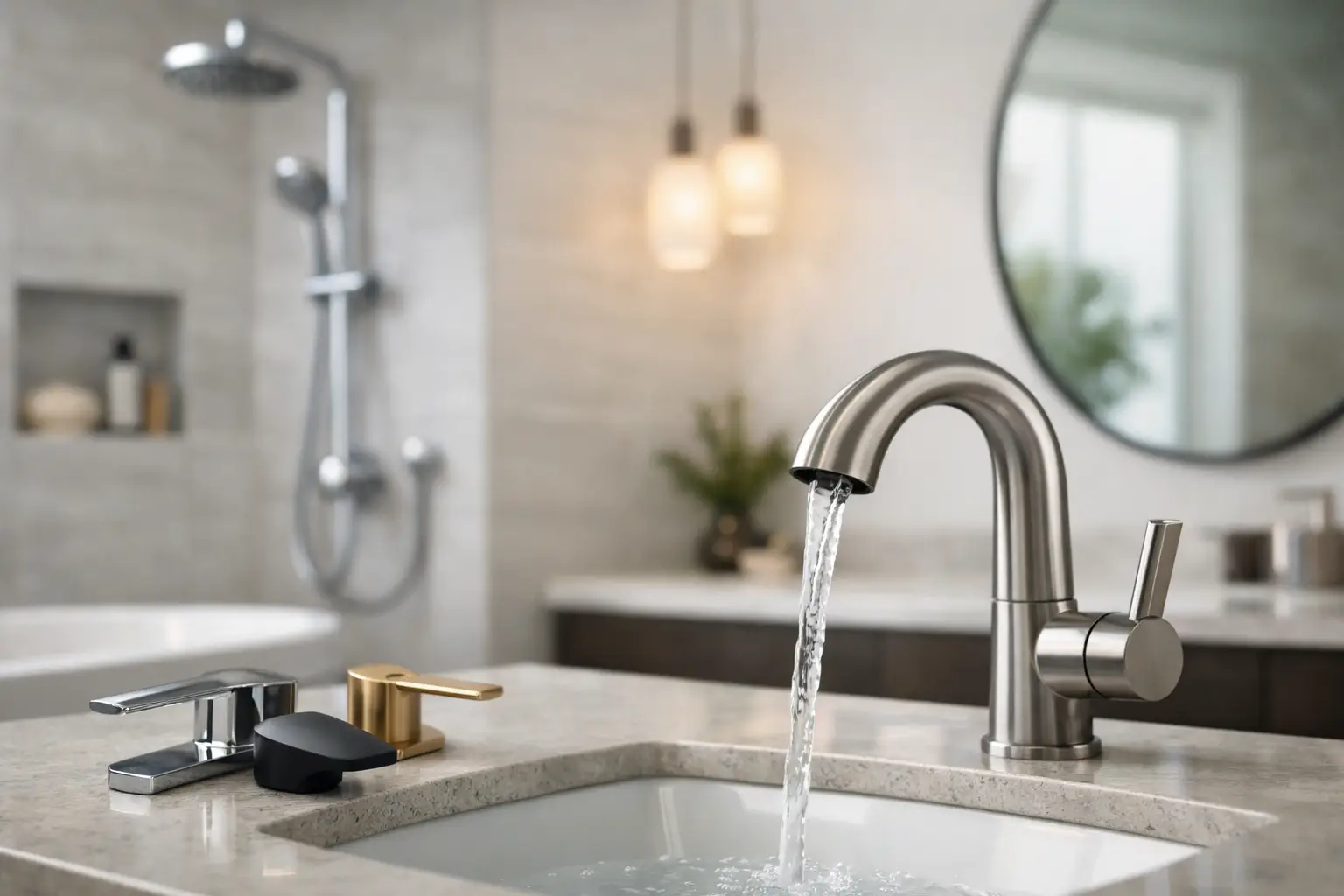
Chrome, brushed nickel, matte black, bronze, and brass can all work well. The right finish depends on the overall style of the home and how much maintenance you are comfortable with. Chrome is widely available, easy to coordinate, and typically more forgiving on a budget. Brushed nickel hides water spots and fingerprints better than many polished finishes. Matte black offers contrast and a modern look, but soap residue and mineral spots may show more clearly in some homes.
Try to keep the faucet, shower trim, and major hardware in a coordinated finish. They do not have to be identical, but they should look intentional together. Mixing metals can work when one is clearly dominant and the other is used as a small accent. Randomly combining several finishes usually makes a bathroom feel unfinished.
Availability matters too. Choose fixtures with replacement parts that can be readily sourced. A distinctive imported faucet may look appealing, but a common cartridge or replacement handle is far easier to service years later. This is especially valuable for homeowners who want practical, long-term maintenance options.
Balance Water Savings With Performance
Water-efficient fixtures can reduce household water use without making the bathroom less comfortable. Look for toilets that use less water per flush and showerheads designed to provide satisfying spray performance at lower flow rates. The best option depends on your home's water pressure and your household's expectations.
A dual-flush toilet can be useful in a frequently used bathroom, but it adds another decision for guests and young children. A standard high-efficiency toilet is often simpler and still uses significantly less water than older models. For showers, a handheld unit adds flexibility for bathing children, cleaning the shower, and assisting someone with limited mobility.
Avoid buying solely based on a low flow-rate number. Read the product specifications, make sure the fixture meets current requirements, and consider how it will perform in your specific plumbing system.
Plan the Order of Work
Do not order every fixture before confirming measurements and installation requirements. The vanity, sink, faucet, mirror, lighting, shower valve, shower trim, toilet, and accessories all affect one another. A vanity top may require a particular faucet hole configuration. A recessed medicine cabinet may conflict with wiring or plumbing in the wall. A new tile layout may change the finished depth of a shower valve.
For a full bathroom remodel, select the major fixtures early, then confirm their specifications before rough plumbing, electrical work, and wall finishes begin. Keep model numbers, finish names, and installation instructions together. This gives the installer the information needed to set valves, drains, and supply lines correctly the first time.
Homeowners in Tallahassee, Marianna, Dothan, and nearby communities can also benefit from having a skilled local professional review the plan before materials are purchased. Sola Handyman Services can help assess the existing bathroom, coordinate practical upgrades, and complete the installation work with the details of the home in mind.
The right bathroom fixtures should make the room easier to use on an ordinary Tuesday morning, not just look good on the day the remodel is finished. Choose the pieces that fit the space, support your routine, and can be maintained with confidence for years ahead.