Can Handyman Install Ceiling Fans?
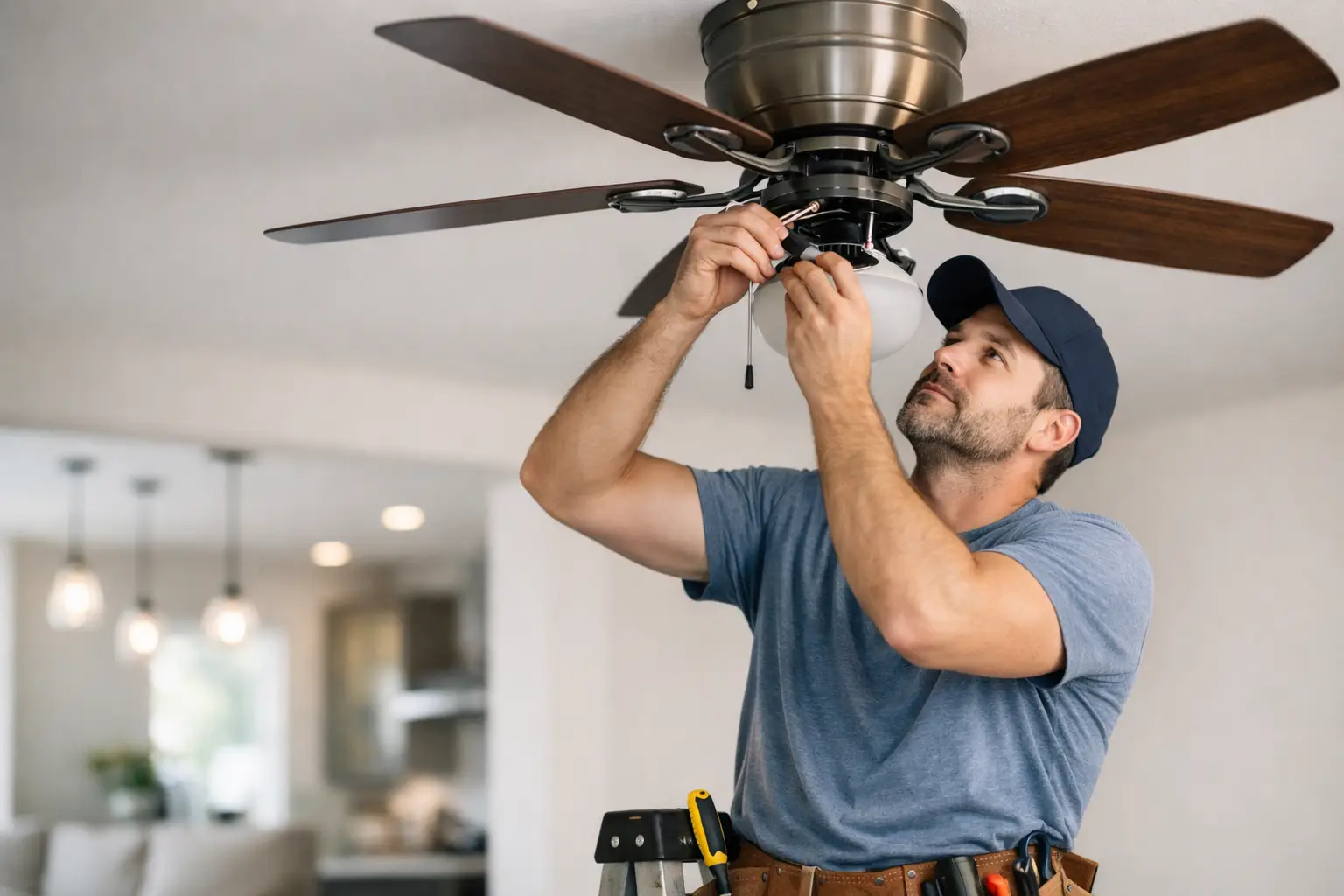
A ceiling fan seems simple until you look up and realize the old fixture is wired into your home, mounted overhead, and expected to run safely for years. That is why many homeowners ask, can handyman install ceiling fans, or is this a job that always needs a licensed electrician?
The short answer is: often, yes. A skilled handyman can install a ceiling fan in many homes, especially when there is already a working light fixture or fan box in place. But like most home projects, it depends on the wiring, the ceiling support, local code requirements, and whether the job stays within straightforward replacement work or turns into electrical modification.
Can handyman install ceiling fans in most homes?
In many cases, yes. If you are replacing an existing ceiling light with a new fan, or swapping out an older fan for a newer one, a handyman may be the right fit. This kind of work usually involves removing the old fixture, checking the mounting box, assembling the fan, making the wire connections, securing the bracket, installing blades and light kits, and testing for proper operation.
That said, ceiling fan installation is not just about hanging something from the ceiling. The electrical box has to be fan-rated, the wiring has to be in good condition, and the fan needs to be properly balanced and secured. If any of those details are missed, you can end up with wobbling, noise, switch issues, or a safety concern.
For homeowners in Tallahassee, Marianna, Dothan, and nearby areas, the value of hiring a qualified local handyman is convenience paired with practical experience. A dependable pro can tell the difference between a routine installation and a project that needs a licensed electrician before the work goes too far.
When a handyman is a good choice
A handyman is often a practical option when the job is direct and the existing setup supports the new fan. If there is already wiring at the ceiling and the electrical box is made to support a fan, the installation is usually straightforward. The same goes for replacing a fan that already works, where the wiring and switch layout are already established.
This is also a good fit when the project includes other small home improvement tasks at the same visit. Many homeowners are not just dealing with one item. They may want a fan installed in a bedroom, a loose door fixed, drywall patched, or a bathroom fixture replaced. That is where a handyman service makes sense because it can address several practical needs in one appointment.
A good installer will also check common problem points during the job. That includes verifying blade clearance, making sure the mounting bracket is tight, and confirming that the fan direction and controls work correctly. Those small details matter because they affect how the fan performs every day.
When you may need an electrician instead
There are situations where a handyman should not be the one doing the work, or where the project should move to a licensed electrician. If the ceiling has no existing wiring and a new circuit needs to be run, that is typically electrician work. The same applies if the wiring is damaged, outdated, overloaded, or not up to code.
You may also need an electrician if the switches need to be reconfigured, if the breaker panel needs attention, or if the fan installation is part of a larger electrical upgrade. Some homes also have unusual ceiling heights, older wiring methods, or previous DIY work that creates complications once the old fixture comes down.
The key issue is not whether the project seems small. It is whether the work remains a fixture installation or becomes a true electrical alteration. A reliable handyman will be clear about that line and will not guess his way through a wiring problem.
What makes ceiling fan installation more complicated than it looks
Homeowners often assume ceiling fans are just light fixtures with blades. In reality, they place more stress on the ceiling box, they have more parts to assemble, and they need precise mounting to avoid movement and noise. Even a fan that appears installed correctly can perform poorly if the box is not rated for fan support or if the mounting is slightly off.
Ceiling height also matters. High ceilings, sloped ceilings, and vaulted rooms can all make the installation more involved. Some fans need downrods, angled mounting kits, or longer ladders to be installed safely. Outdoor ceiling fans add another layer because the location may require damp-rated or wet-rated equipment.
Then there is the issue of controls. Some fans use pull chains, some connect to wall switches, and others use remotes or smart controls. If the fan and the home's existing wiring are not compatible, the job can get more complicated quickly.
What to expect during the job
A professional ceiling fan installation should start with a look at the existing fixture location. The installer should confirm whether the electrical box is fan-rated, inspect visible wiring, and review how the fan will be controlled. If there is a problem with support or wiring, that should be addressed before the fan goes up.
From there, the old light or fan is removed, the new mounting hardware is installed, and the fan is assembled according to manufacturer instructions. Wire connections are made carefully, the canopy is secured, blades are attached, and the unit is tested. If there is a light kit, that also needs to be installed and checked.
A careful installer will not rush the finishing details. Blade alignment, wobble testing, and control setup all affect whether the fan feels solid and reliable after the job is done. Homeowners usually notice poor installation right away through shaking, clicking, or weak operation.
Questions to ask before hiring someone
If you are hiring help for this project, ask whether the person has experience specifically with ceiling fan installation, not just general repairs. Fans are common, but they are not the same as replacing a light bulb or hanging a shelf.
It also helps to ask what happens if the existing box is not fan-rated or if wiring issues are discovered. A professional should explain what is included, what could change the scope, and whether another trade would be needed for part of the work. Clear answers upfront usually save time and frustration later.
You can also ask whether the installer handles high ceilings, remote-controlled fans, outdoor fans, or replacements where an old fixture has been in place for many years. Those details help you know whether the service matches your home.
Why homeowners often choose a handyman for this work
For many households, the appeal is simple. A handyman offers practical help without turning a modest fixture replacement into a drawn-out project. When the installation is straightforward, this can be an efficient way to improve comfort, lighting, and energy use in bedrooms, living rooms, porches, and other spaces.
It is also a good example of where broad home repair knowledge matters. The work touches electrical components, ceiling support, hardware assembly, and finish details. That combination is why many homeowners prefer calling one trusted service instead of trying to manage the job alone.
In our area, homeowners are often balancing work schedules, family responsibilities, and a running list of home maintenance needs. A professional service like Sola Handyman Services can be a practical option when you want the fan installed correctly and do not want to spend your weekend on a ladder sorting out brackets, wires, and instructions.
The real answer depends on the setup
So, can handyman install ceiling fans? Yes, in many situations a skilled handyman can handle the job safely and efficiently. But the real answer depends on whether the installation is a standard replacement or whether hidden wiring, support, or code issues turn it into a larger electrical project.
That is why the best first step is not guessing. It is having the fixture location looked at by a qualified professional who can tell you whether the job is straightforward, what the installation involves, and whether anything else needs to be addressed before the fan goes up. A ceiling fan should make your home more comfortable, not leave you wondering what is rattling above your head.