Bathtub Refinishing vs Replacement
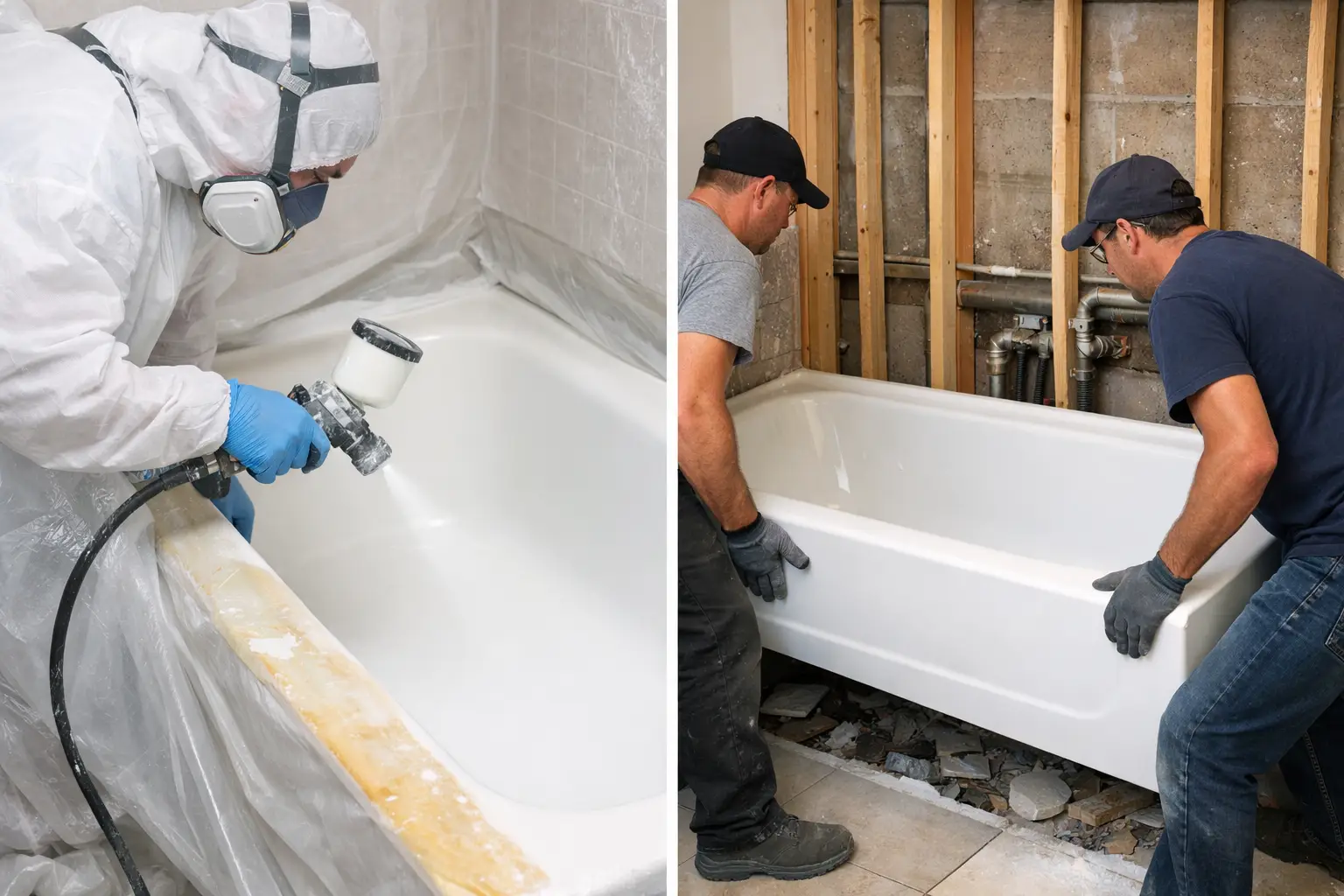
If your tub is stained, chipped, or just making the whole bathroom look older than it is, the question usually comes down to bathtub refinishing vs replacement. Both options can improve the look and function of your bathroom, but they solve different problems. The right choice depends on the tub’s condition, your budget, your timeline, and whether you want a cosmetic update or a more complete remodel.
For many homeowners, the biggest factor is simple: how far gone is the existing tub? A worn finish, minor surface damage, and discoloration can often be addressed without tearing the bathroom apart. On the other hand, a tub with structural damage, persistent leaks, or installation problems usually points toward replacement.
Bathtub refinishing vs replacement: what is the difference?
Bathtub refinishing keeps the existing tub in place and restores its visible surface. The process typically involves cleaning, repairing minor chips or cracks, sanding or etching the surface, and applying a new coating. The goal is to make the tub look cleaner, newer, and more consistent without removing it from the bathroom.
Bathtub replacement means taking out the old unit and installing a new one. That sounds straightforward, but it often affects more than just the tub itself. Depending on the bathroom layout and the condition of surrounding materials, replacement may also involve plumbing adjustments, wall repair, tile work, flooring repair, or updates to the shower surround.
This is why bathtub refinishing vs replacement is not just a style decision. It is also a construction decision. One option is surface-level improvement. The other is a larger project with more moving parts.
When refinishing makes sense
Refinishing is usually the better fit when the tub is still solid and functional but looks worn. If the main issues are cosmetic, this approach can give the bathroom a cleaner appearance without the higher cost and disruption of a full replacement.
A cast iron or steel tub with stains, dullness, minor chips, or an outdated color is often a strong candidate. Many older tubs are built better than newer budget models, so keeping the original fixture can make sense if the body of the tub is still in good shape.
Refinishing also works well when the rest of the bathroom is staying mostly the same. If you are not changing the layout, not opening walls, and not replacing surrounding tile, restoring the tub can be a practical way to improve the room without turning it into a full renovation.
For homeowners preparing a property for sale or trying to improve an older bathroom on a tighter budget, refinishing can offer a noticeable visual upgrade with less downtime.
The main advantages of refinishing
Cost is the biggest reason people choose refinishing. In most cases, it is significantly less expensive than replacement because you are not paying for demolition, disposal, a new tub, and the repair work that often follows removal.
It is also faster. A replacement can stretch into a larger remodeling project once walls are opened and hidden issues are found. Refinishing is usually much more contained.
Another advantage is less disruption. You are not dealing with the same level of noise, debris, plumbing changes, or potential damage to surrounding finishes. That matters if you only have one main bathroom or you want to avoid a drawn-out project.
The limits of refinishing
Refinishing is not a fix for every tub problem. It improves the finish, not the overall design or structural condition of the fixture. If the tub is cracked through, flexing, leaking, badly rusted, or poorly installed, a new coating will not solve the root issue.
It also will not change the size, shape, or placement of the tub. If you want to convert a tub to a walk-in shower, create more space, or modernize the whole layout, refinishing will not get you there.
Durability is another point to consider. A quality refinishing job can last for years with proper care, but it is still a surface treatment. A new tub, installed correctly, may offer a longer-term solution if the bathroom is due for broader updates anyway.
When replacement is the better choice
Replacement makes more sense when the tub has deeper problems or when the bathroom is already being remodeled. If you are updating tile, replacing plumbing fixtures, fixing water damage, or changing the layout, installing a new tub is often the more logical step.
A replacement is usually worth considering if the current tub has major cracks, widespread rust, soft spots, chronic drainage issues, or signs of leakage around the base or walls. These are not cosmetic concerns. They point to functional problems that can affect surrounding materials and lead to bigger repair costs over time.
It is also the right move if the existing tub no longer fits your needs. Some homeowners want a deeper soaking tub. Others want a lower threshold for easier access. In some homes, replacing the tub is part of making the bathroom safer and more comfortable for long-term use.
Why replacement costs more
The tub itself is only part of the cost. Removal takes labor. Disposal adds another step. Then there is the work needed to install the new tub properly and reconnect plumbing. Once the old tub comes out, there may be damage behind the walls or below the fixture that was not visible before.
In older homes, this can include rotten framing, outdated plumbing, or wall materials that need to be brought up to current standards. That does not mean replacement is a bad choice. It just means the true scope is often bigger than homeowners expect at the start.
The upside of starting fresh
Replacement gives you a clean slate. You can choose a tub that fits your current style, preferred material, and everyday needs. If your bathroom has multiple aging components, replacement can be part of solving several problems at once instead of putting a better-looking finish on one old fixture.
This option can also add value when the existing tub is dragging down the overall condition of the space. A new installation often makes the most sense when the goal is not just to refresh the bathroom, but to improve reliability and function for the long term.
Cost, timeline, and disruption
When homeowners compare bathtub refinishing vs replacement, these three factors usually settle the question.
Refinishing is generally the lower-cost option and the faster one. It is best for tubs that are fundamentally sound and just need a better appearance. If your goal is to improve the bathroom without a major project, refinishing often checks the right boxes.
Replacement requires a larger budget and more flexibility. Even a straightforward swap can involve more labor than expected, especially if surrounding walls, plumbing, or flooring need attention. But if the tub is damaged beyond surface repair or the whole bathroom is being upgraded, replacement may save money in the long run by addressing the real issue now.
The disruption level matters too. A busy family, a one-bath home, or a property with limited access may benefit from the quicker and cleaner path. A homeowner already planning broader improvements may be more willing to accept the extra time and mess that comes with replacement.
How to decide which option fits your bathroom
Start with the condition of the tub, not just how it looks from across the room. Surface stains, minor chips, and worn color usually suggest refinishing is worth considering. Structural cracks, water damage, instability, or recurring plumbing concerns usually push the decision toward replacement.
Then think about the room as a whole. If the tub is the only problem, refinishing may be enough. If the bathroom has aging tile, outdated plumbing, damaged walls, or a layout that no longer works, replacement may fit better with your bigger plans.
It also helps to think about how long you expect to stay in the home. If you want a practical improvement without overspending, refinishing can be a smart move. If this is your long-term home and the bathroom needs broader work anyway, replacement may be the better investment.
Why an in-person assessment matters
Photos can show stains and chips, but they do not always reveal movement, water damage, hidden leaks, or installation issues around the tub. That is why a hands-on inspection is the best way to choose between refinishing and replacement.
A qualified home improvement professional can look at the tub, the surround, the plumbing access, and the overall condition of the bathroom before recommending a path forward. For homeowners in Tallahassee, Marianna, Dothan, and nearby areas, that kind of practical guidance helps avoid paying for a cosmetic fix when the real problem is underneath.
The best bathroom updates are the ones that match the actual condition of the space. If your tub only looks worn, refinishing may be enough. If the problems go deeper, replacement is often the smarter call. A good decision starts with an honest look at what the bathroom needs now and what will hold up well for years to come.